Marketers Strive for More

Those working in marketing are quite familiar with the relentless pursuit of market share, brand awareness, conversion rates, and the list of metrics goes on… Yet, amidst all of these metrics, there are some that are particularly interesting such as the race for claiming association with specific occasions, shapes or even colors.

Let me refer to some familiar examples: Consider the clash of brands competing for association with particular occasions. Kit-Kat claims the “break occasion,” while Coca-Cola stakes its claim on the “meals together occasion.” Then there’s the struggle for dominance in the realm of colors. Mondelez, with its iconic Milka brand, champions the color purple, while Reckitt Benckiser endeavors to be synonymous with pink with their Vanish brand. Lastly there is also the battle for recognition based on shapes. When one thinks of the egg shape, Kinder reigns supreme as the most closely associated brand.

So if you consider the Easter occasion, the imagery of eggs is top of mind… and the egg-shape is traditionally owned by Kinder. What would you do if you were Mondelez, and color purple is your strong asset?

This pursuit of association gave rise to a stroke of genius in packaging.

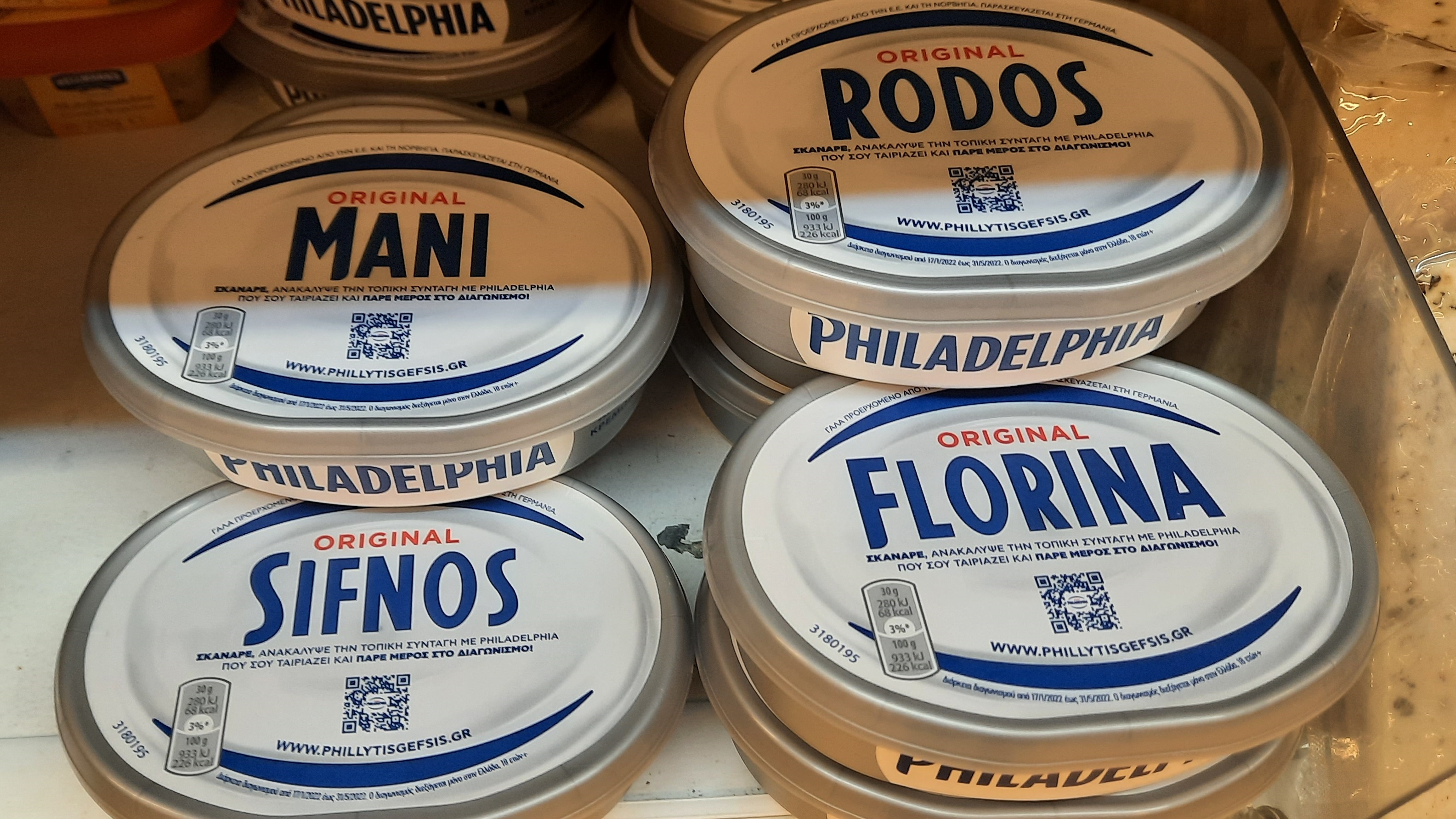
I noticed this ingenious packaging of Mondelez’s chocolate eggs breaking the clutter in shelves, simply by nesting their chocolate eggs in an iconic purple carton (yes the one that real chicken eggs are sold in). In one shot Mondelez asserted ownership over not just the color purple, but also the iconic egg shape and hence the Easter occasion itself. Great move!

Happy Easter to all the witty people out there!

Marketers Strive for More

Meticulously breaking down the Customer Journey

Delivery services are frequently overlooked when it comes to the Customer Journeys in retail stores. As marketers, we often discuss about awareness, consideration and the conversion part of the journey and the support, retention and advocacy steps after the purchase.

This is why I particularly appreciated the rent a trailer service at Praktiker Greece. There is nothing more frustrating than delaying the handyman’s work because the delivery service should be scheduled during the following day or the materials purchased cannot fit in your vehicle.

True to the nature of their Customers (avid DIYers ), with minimum investment and a clear communication, pricing and procedure the Retailer managed to increase Customer satisfaction and… nail this!

Meticulously breaking down the Customer Journey

Market a Solution, not a Product

How many times have you encountered that familiar phrase, only to find a rare gem of an example that truly brings it to life? Couple this with some skillful copywriting, and… voilà! You’ve got a compelling point of sales communication!

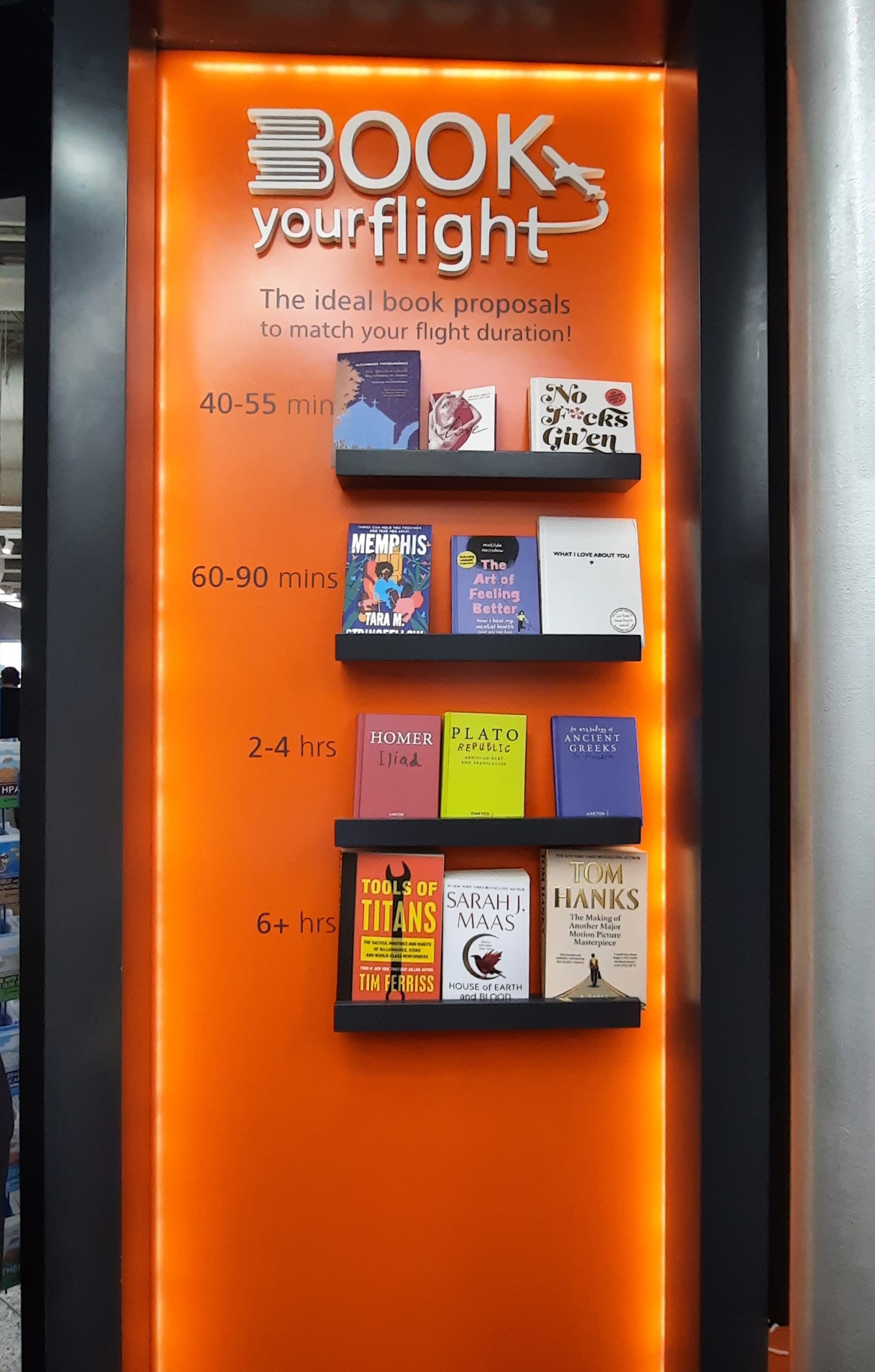
During a leisurely wait before my flight at Athens International Airport, I stumbled upon a clever bookshelf encouraging passengers to select a book based on their flight duration.

Next time you find yourself at the Greek capital’s airport, ensure you “book” your flight according to your anticipated time in the skies. As George R.R. Martin once eloquently expressed, “A reader lives a thousand lives before he dies… The man who never reads lives only one.”

Solution Marketing POS messaging @ Athens International Airport

Market a Solution, not a Product

Everything Communicates

As I was running around my neighborhood, I noticed the below sign in one of the house construction sites along my route. It drew my attention, as it was a clear warning label for keeping safety precautions while on site. One would argue “What’s the great deal about it?” and I may agree to a point until I realized that this communication is checking two very important boxes

  • It serves a great purpose, that is of work safety in a clear, illustrative way
  • It communicates the company group’s name, the company and also a brand motto (which is so cool for a cement company as it translates “relationship on solid foundation”)

Building further on the second point, this leadership practice of placing such signage is ultimately showing respect and professionalism and could be translated multifacetedly as taken by various stakeholders. The constructor (B2B client) is happy with a useful piece of communication material that upgrades his image while keeping him compliant with H&S rules, the potential B2C customer translates this as a responsible practice which may affect positively his preference when buying a B2C product from the company (eg. for DYI use), a business professional may consider the company for employment, a prospect investor may consider purchasing company’s stock (even though Lafarge’s stock has stopped trading in the Athens Stock Exchange for some time)… and the list goes on.

Some may find “Everything Communicates” a cliché, I find this a perennial universal truth.

Everything Communicates

A handmade brand story

What is the role of marketing claims when you are purchasing a product? Why are you buying one product vs. another at the decisive moment in front of the shelf?

Marketing claims are there to generate demand for a certain item (or service if you like). However, most importantly, brands would like to provide you with an emotional benefit (through a brand story) coupled with their product, in order to earn your preference. Handmade products are a special category in this, as they try to tell a unique story that’s also greatly connected to the person who actually made the product.

In this frame I particularly liked the below practice from Lush, a cosmetics manufacturer and retailer that make their products using only vegetarian or vegan recipes. I found out that 100% of their products are handmade by people who mix up fresh batches of materials everyday. I got a hold of a Lush product and the package looked quite ordinary at first. Nothing but the claim “handmade” on top of the pack to stress that this product was indeed handmade but… wait a minute… as soon as I flipped the cream container; I noticed a face sticker at the bottom of the package. This is the cartoon version of the person who actually made the product! His name is Dada (!) and his cartoon version looks a bit like me. What a fantastic twist having this kind of visual information on pack. Knowing who made the product and looking at the graphic version of his/her face, gives you a warm feeling and bonds you with the product. This practice conveys a unique story, as soon as this handmade product by a unique individual reaches your hands. In this “uniqueness relay”, the final receiver of the product cannot help but feeling unique and taken care of!

I’m closing with a quote from the company’s website, on why they insist on offering handmade products. This encapsulates their beliefs, constitutes a beautiful brand story and is indeed a very strong element of their USP. “This way, we can ensure that everything we use is of the highest quality and has been ethically sourced from beginning to end. Ever since our humble beginnings, handmade has been a part of our story. It’s not just part of our name; it’s part of who we are.”

Great stuff! What is your brand story that conveys your unique selling proposition?

A handmade brand story

Reframing a F*ckup and the Lost Opportunity

As we are going through the second lockdown in Greece, we have fewer opportunities available to entertain ourselves while at home. Although we are not much into delivery, we thought we could introduce dinner delivery as a new family ritual to entertain ourselves, while also supporting F&B businesses through these challenging times. Therefore, once a week we order from a different restaurant and enjoy our meal from various cuisines.

Last Saturday it was burger’s turn and we ordered our dishes from a relatively new and highly rated burger restaurant. Two from us chose the classic beef patty, whereas the rest two preferred chicken burger. To cut the long story short, the two family members that preferred chicken burger got food poisoned…

I thought I had to inform the restaurant next morning, so as they withdraw any “suspicious” chicken product that caused the food poisoning. The woman who picked up the phone said she was sorry and then we hang up. I am confident my tone of voice came out calm and in no way aggressive and I had no purpose whatsoever to claim anything from them. My sole intention was to inform them so that no one would experience what my family had gone through.

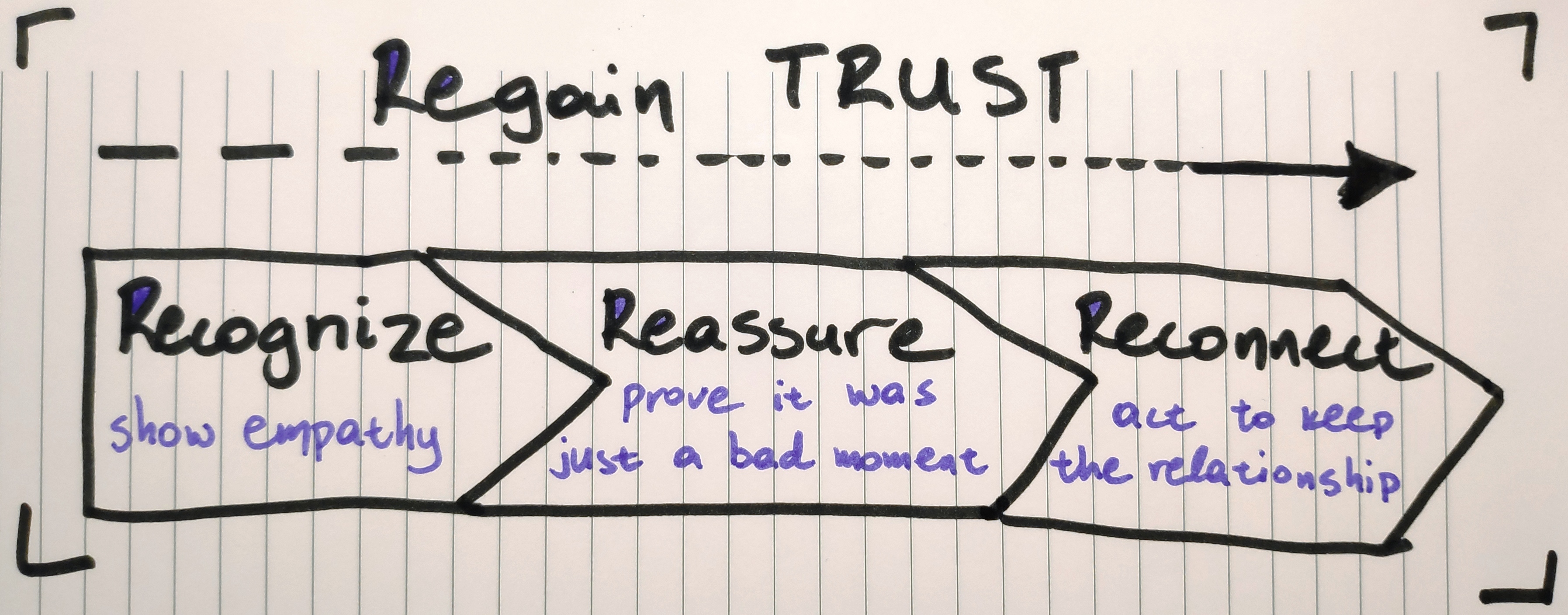
In many businesses relationships matter, and I sense restaurants are no exception to this. After the call, I felt the communication was not complete. I would have expected a second call (possibly from the owner / manager) having three main pillars:

  • Apologize and express empathy for the incident (a good trait of emotional intelligence) “Hello I am the owner of the burger house. I was informed that you had an incidence last night after consuming a burger from us. We are very sorry! I hope you are feeling better now.”
  • Ask for more details and inform us on their actions for food safety and the quality of their ingredients “This is a unique incident for us. We follow HACCP and source our products from X supplier who offers superb quality. We are always looking into such incidences, so as to avoid them in the future”
  • Keep the relationship alive and make the Customer feel unique. “I know I cannot make things up, however let me refund you the cost of the meal / offer you a free meal next time”

F*ckups happen. They will always happen and that is understandable. Silence does not make up. It is sincere and open communication that builds bridges and restores Customer Trust.  

Reframing a F*ckup and the Lost Opportunity

A playful twist for a (previously) dull passage

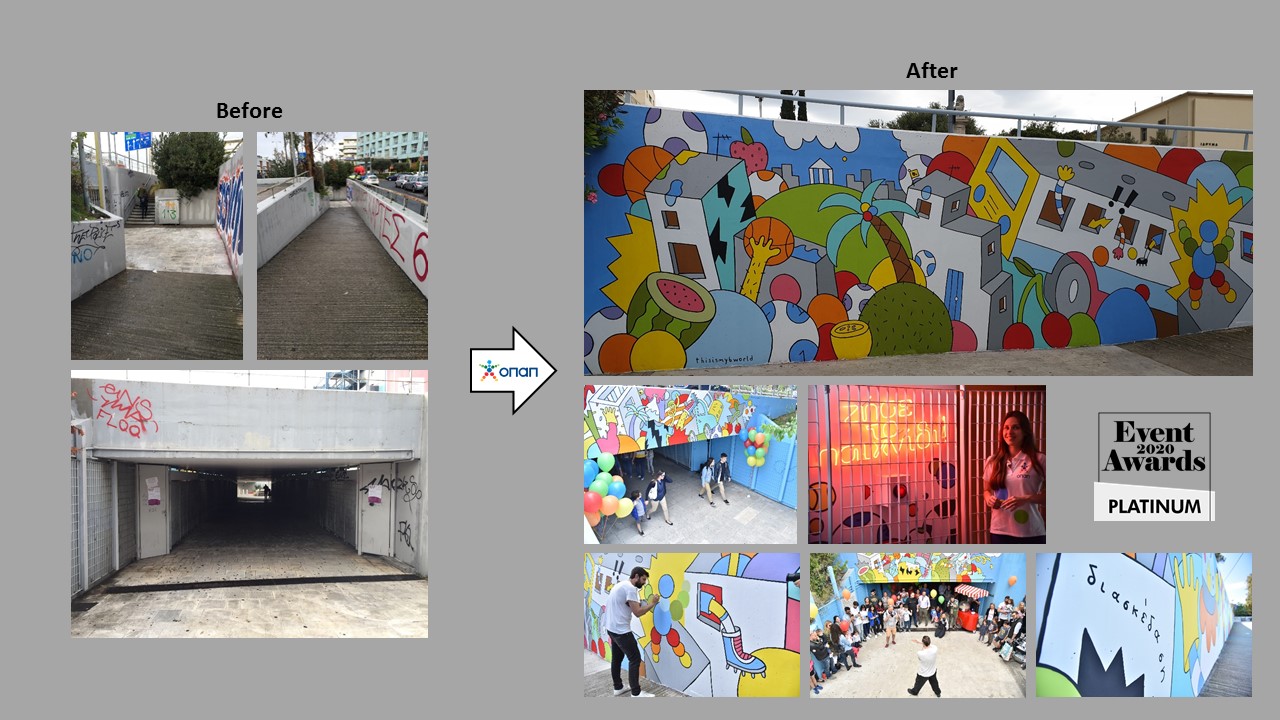
I’ve been writing my blog for 6 years and I have never praised projects that I have led (at least not until today). However, on November 2020 while Greece is experiencing the second phase of a lockdown, I had the honor to receive a Platinum distinction in the Event Awards 2020 organized by Boussias Communications for the project “The First Interactive Under Passage in Greece”. I felt that amidst these tough times, this is the right moment to write about this case and highlight the significance of brand experience as we navigate through Covid19. Let me break down for you, why I believe this is a particular good story to share.

In early 2019, I took the courage to propose to my manager an idea to revamp an underground passage in the city I grew up. Why does it take courage to propose something like this?  There are numerous reasons but let me provide my top 5: A. It needs a good amount budget B. You face the risk that the project gets vandalized C. Initiatives like this are often mistaken for CSR actions and not perceived as brand initiatives (ie. there is a weak brand role in the renovation) D. It is almost impossible to hit the right balance between a branded intervention (which also included a high risk of vandalism) and a restoration that cannot be attributed to a brand (ie. this is nice but we don’t know that OPAP did it) E. Collaborating with the Public Sector can be long and cumbersome. Even one single reason of these, could have discouraged us and force us abandon the idea.

Continue reading “A playful twist for a (previously) dull passage”
A playful twist for a (previously) dull passage

Hit while the iron is hot

Covid19 has a tremendous negative impact on the economy so far. However, as all wise people would argue, every coin has two sides. For financial services corporations like Visa, Covid19 has been a main driving force for even wider adoption of card payments and more specifically contactless payments. It seems that contactless payments are indeed on a sharp rise worldwide, especially during the last months. What should financial services companies offering contactless payments do in such an occasion? Should they lay back and enjoy the favorable side effect of a pandemic or ride the wave and try to establish both contactless payments as well as themselves as leaders in this field.

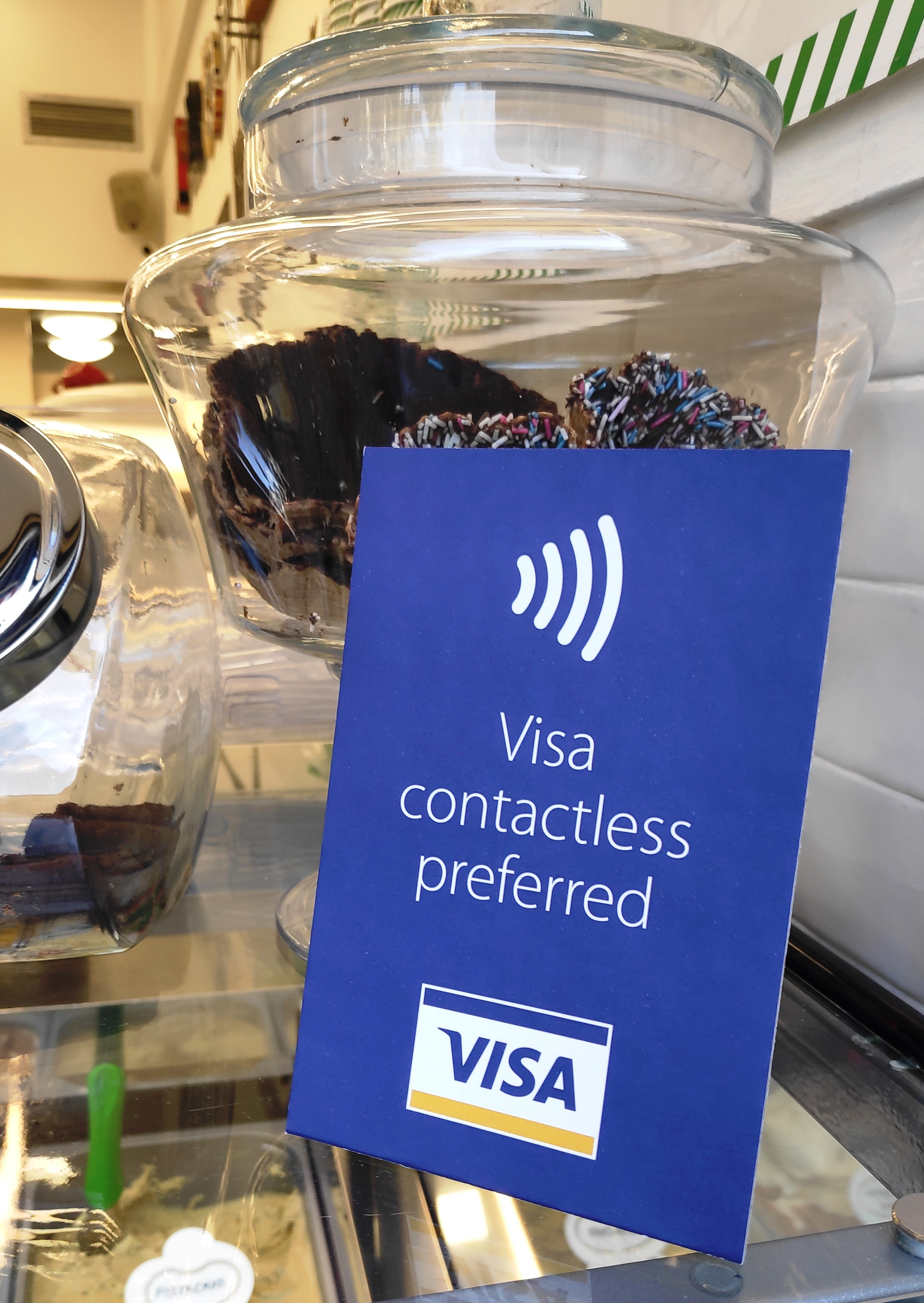
Visa decided to do the latter, and hit while the iron is hot. I noticed the below table tent in a gelateria in the center of Athens. I particularly enjoyed the straightforward messaging (Visa contactless preferred) as it was the shortest message possible, with the brand mentioned first and the word “preferred” serving as a nudge rather than an obligation or an option. The artwork was uncluttered and the placement of the table tent on top of the ice-cream vitrine could not be better. I paid using my contactless Visa.

Well played Visa, well played.

Visa Point of Purchase advertising material

Hit while the iron is hot

Breaking the clutter – the two angel debate

Have you noticed to how many ads you are exposed everyday? From TV spots in lengthy commercial breaks, to skippable ads and pop up banners, advertisers go fiercely after our valuable attention. They aim for message reach, they want to maximize click through rates and conquer top of mind awareness for their brands. In this struggle, marketers set KPIs, follow metrics and peruse market research studies in an endless (and probably vain) race.

But wait a minute… Let me slightly rephrase the sentence above: “Advertisers go after our valuable attention, mainly while we are in front of a screen.” What happens when we are off-screen?

 – “You can’t measure that!” says the online communications angel sitting on the right shoulder.

– “It is when you are off-screen where amazing happens!” says the offline communications angel sitting on the left shoulder.

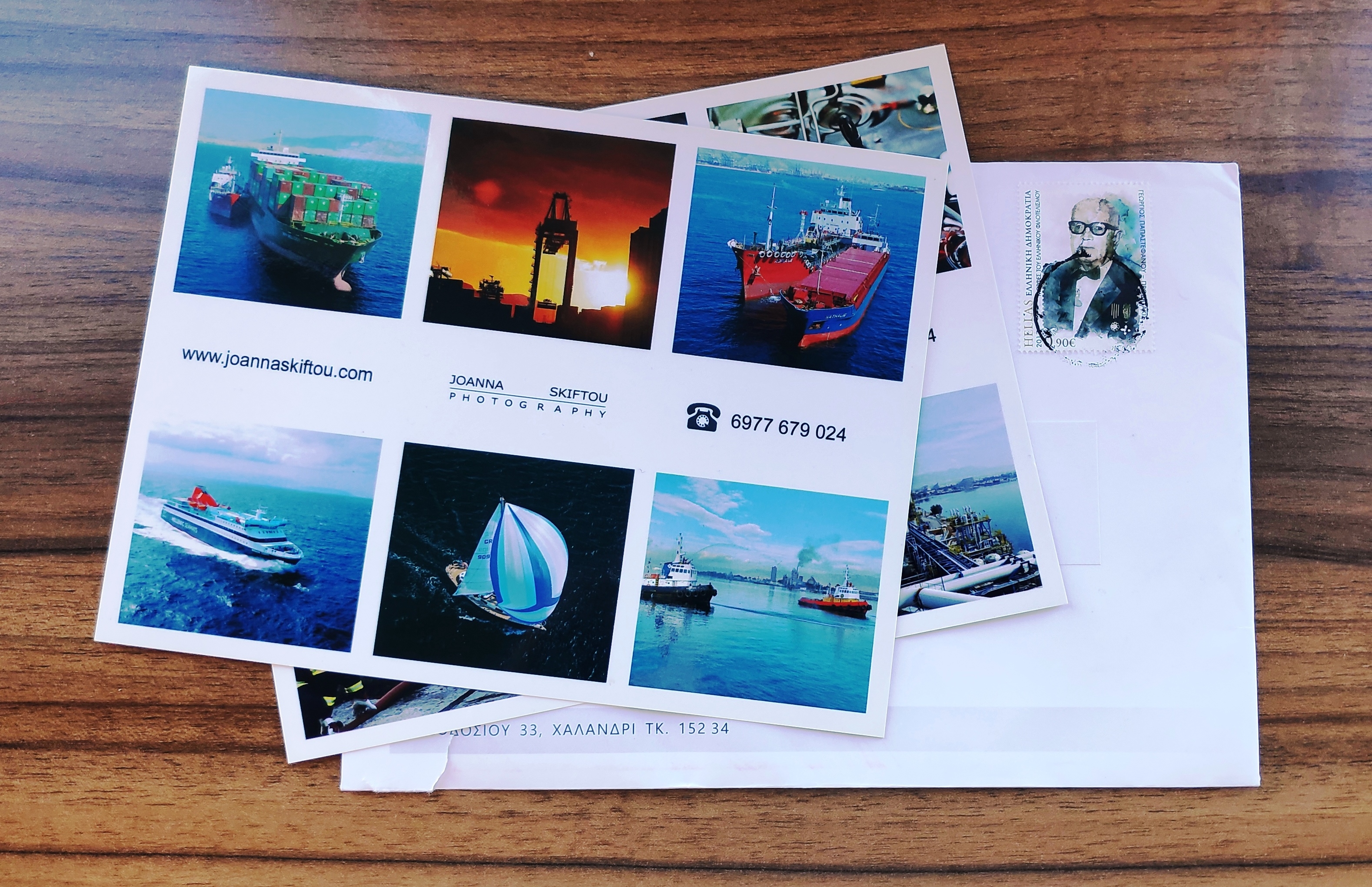
I guess professional photographer Joanna Skiftou, listened to the last angel and decided to snail mail me (yes you heard that right!) two printouts with a small sample of her portfolio to my office address. Since we haven’t physically met before, but we were only connected on LinkedIn, I quickly figured out that she preferred to quickly google search my office address and post me a small but distinctive sample of her work instead of sending me a digital message with her full online portfolio. She decided to proceed with a traditional mail so that the prospect pauses and considers her extraordinary sample of work. Why did I like it? Because the communication was super targeted (to a marketing professional, during working hours time slot) and because she used an alternative uncluttered channel. In this way, she achieved literally to come in touch with her work, breaking the overwhelming digital clutter.

Going offline when everyone else is online can work truly well.

What are you planning to do differently, in the environment we operate today?

Breaking the clutter – the two angel debate